Friday, September 17, 2010

Maury Wills Stole the League in the 1960's


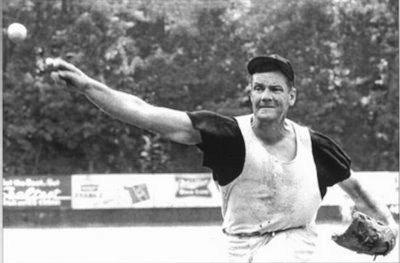
Maury Wills was a switch-hitting batter, slick fielding shortstop, base stealing phenomenon who played prominently with the Los Angeles Dodgers(1959–66, 1969–72) and also with the Pittsburgh Pirates (1967–68) and Montreal Expos (1969). He was an essential component of the Dodgers' championship teams in the mid-1960s, and deserves much credit for reviving the stolen base as part of baseball strategy. In a 14-season career, Wills batted .281 with 20 home runs, 458 runs batted in, 2,134 hits, 1,067 runs, 177 doubles, 71 triples, and 586 stolen bases in 1942 games. He is a seven-time all-star and in 1962. As of 2009, Wills is a member of the Los Angeles Dodgers organization serving as a representative of the Dodgers Legend Bureau.

One player changed his life: “My high school was full of great runners; really fast guys who were much faster than me. They stuck me in the middle of their four-man relays, but I wasn’t fast enough to anchor. I played every sport, but baseball was always my favorite. Then one day everything changed when a professional baseball player showed up on our playground and he was from the Washington Senators. We didn’t know anything about the Washington Senators. No word ever got in or out of the projects back in those days. But this man had a nice uniform on, color coordinated with the piping down the sides of his pants; his shoes were clean and were shined up real nice; he had belt loops and he was well-groomed with clear eyes and he was white. How he made it to our neighborhood I’ll never know. And we were like—wow, before this we used to idolize the guys in our neighborhood who played on the weekends, they called them semi-pros. They all had mismatched uniforms on. Argyle socks under their stirrups. And they all had a half pint of whiskey in their back pockets and they looked like they hadn’t slept all week. They were our heroes and we wanted to grow up to be just like them. We figured if we grew up and played on their team, we would be successful. They were hard-working men, many who didn’t have jobs and surely weren’t looking around for a job, guys who just played Negro-league style baseball on the weekends. That’s where I learned to play Negro league style, which involved a lot of running. It’s what they call ‘small ball’ today, but I call it baseball. And then all of a sudden, here comes this white professional baseball player and his name is Jerry Priddy, you can Google him and he died years later and I doubt he even knew how much he impacted my life as a kid. Years later as a Los Angeles Dodger, they used to ask us to go out into the community to talk to kids and some of my fellow players didn’t want to go. But, I always went and I’ll always go if people ask, because I am indebted to Jerry Priddy for what he did for me when he singled me out on that playground many years ago. Players would show up at these community events and then just stay for the agreed-upon minimum 20 minutes, but I was always thinking, Jerry Priddy didn’t leave after 20 minutes, he hung out with us for at least two hours. So, I would always stick around and usually I was the last player there.”

Inspired by Jackie Robinson: “In 1947, I started hearing a lot of talk in the projects about a man named Jackie Robinson playing for a team called the Dodgers. Oh, who is Jackie Robinson? Where’s Brooklyn? I started asking. They told me it’s in New York and I asked where’s that? So, I walked away and said to myself, I’m going to play for the Dodgers one day. That’s when I thought that I could be a major league player.”

His MVP year: “I won the MVP in 1962 and Willie Mays keeps reminding me that he should have won the MVP that year. This is 2010, and he’s still telling me about it. I told him Willie get over it, man. I always got the Dodgers that one run we needed and especially that season.”

The Brooklyn Dodger vets: “Those early years of the Los Angeles Dodgers featured guys like Duke Snider, Carl Furillo and Gil Hodges, but by that time they were even more distant and intolerant of the wave of younger players coming in. They were a whole different breed of cat coming from Brooklyn. Different players from different eras have varied approaches to the game, but these guys were not what you’d call warm and fuzzy. I’m not saying they weren’t good people, but they sure couldn’t be categorized as nice people, you know? They were grumpy and standoffish in many ways. They wouldn’t help you or hang out with you. On that team you were on your own—you either made it on your own or failed on your own on that team. I have a good friend from that period—his name is Don Newcombe—and he’s still grumpy to this day. Gilliam was aloof, but a little nicer than the other ones.”

Alston & Koufax: “Walt Alston was a gentleman and very dependable, but he was a no-nonsense guy, but he didn’t say many words and I can’t remember really seeing him smile or laugh much. He was all-business, just like many of his veteran players. A good friendship developed over the years between me and Sandy Koufax. When he had arm trouble, he would stay after the games to ice down his arm, and I’d be there too icing down my legs. So, we spent a lot of time together all alone in the clubhouse, just he and I Sometimes we’d have to find a security guard to let us out of the stadium, because it was all locked up. So, that’s how we became friends and developed a lot of trust. To this day, I have Sandy’s cell phone number and I don’t think many people have it, because he’s a very private individual.”

One game that changed his life: “For a long time, I was batting eighth for the Dodgers. Batting ahead of the pitcher is not a great spot to be in to use your speed and my base running and base stealing abilities. And my bat wasn’t anything to write home about, I had to be a disciplined fielder and things like that to impress them and stay in the lineup. Pee Wee Reese used to take me out at least five days a week to work with me on my fielding—hard, hard, hard. So, then in early July that season (1960) we went to Spokane Washington for the Dodgers on an off day to play their AAA team there. I had played for that team the year before and I maintained my family there, so a big crowd came to the game. I was in the clubhouse getting ready when Alston came back and said, ‘This is a big crowd and I think they came to see you. Why don’t you lead off?’ I was in shock. And he said ‘yeah’. And then as he was leaving the clubhouse, Alston turned back around—now mark this moment because it changed my life—and he said, ‘And don’t wait for the steal sign, if you wanna go, then just go!’ I went out there and got something like four hits, stole about three bases, I was running from first to third on ground balls through the infield and my teammates were telling me, ‘Slow down because you’ll hurt yourself. It’s just an exhibition game’ and I told them, not for me. I had a great day and we went on to Cincinnati from there. We were in the locker room getting ready when Alston walked over to my locker and said, ‘Why don’t you just stay in that leadoff spot? And don’t wait for steal signs either.’ Man, I had a great season after that. I was in the top ten in hitting and stole 50 bases, beating the Dodger team’s record, formerly held by Jackie Robinson.”

Why the Dodgers traded him to Pittsburgh: “Because I jumped the tour in Japan without the team’s permission. We went to Japan after we lost the 1966 World Series. I got hosed on that too. It was supposed to be a voluntary trip, and my leg was all banged up—I busted the cartilage in my right knee earlier that season, getting caught up in a run down in New York playing against the Mets. Koufax and Drysdale said they couldn’t go on the trip because they said they had previous business commitments. But back then, players didn’t have any business commitments, they just didn’t want to go and the team wouldn’t force them. And I showed them how messed up my leg was and they still made me go. But they said I wouldn’t have to play, just sign autographs. I said okay and when I got there they started playing me. Pretty soon, the leg started hurting more and more. I asked for permission to go home and they said no. So, I got my own ticket and went home. The late Walter O’Malley didn’t like it and he got rid me of me—they traded me to the Pirates. I cried for a week when I heard about it.”

Monday, September 6, 2010

Me and Tony Malinosky


He's the oldest living MLB baseball player on the planet and it was a pleasure meeting and interviewing the 100-year old Tony Malinosky. He played only one season for the Brooklyn Dodgers, but he fought in the Battle of the Bulge and one of his college buddies was Richard Nixon. He's lived an amazing life and next month he'll turn 101!

Monday, August 30, 2010


Last week was HUGE for my pursuit of interviewing the oldest living baseball players for my upcoming book, Chasing Greats (June 2011, McFarland Publishing). My goal is to interview the players who can still be interviewed, and cross off my list of the ones who can't be interviewed for whatever reason.
So, here's what happened last week:
First, I contacted Ray Hathaway (#21 on the list) and interviewed him on the phone.

On Sunday, I drove 12 hours to and from Oxnard to interview the oldest living player, Tony Malinosky.

Later that day, I traveled to Ventura to locate Don Lang (#9). I was able to contact Don's wife and she explained that he cannot speak or recognize anyone. So, unfortunately, no interview there.

And finally, I had to take Eddie Joost (#16) off my list. He told me in very simple terms that he doesn't want to be bothered by any writers. Oh well.
So, four off my list--I'm making good progress!
Photos
Top: Don Lang
Next: Tony Malinosky
Bottom: Ray Hathaway

Wednesday, August 18, 2010

Should Gil Hodges Be in the Hall of Fame?


I recently wrote about Lefty O’Doul, a San Francisco baseball legend who deserves be in the Hall of Fame, I believe. Another player/manager who should be in the HOF is the late Gil Hodges. His statistics and contributions to the game as a manager and as a role model make him more than merely a candidate. The Marina has a connection to Hodges, because Gil Hodges III, Gil’s grandson, is well-known in the neighborhood as a co-owner of Liverpool Lil’s. Gilbert Hodges played first base primarily for the Brooklyn and Los Angeles Dodgers. He was the major leagues' outstanding first baseman in the 1950s, with teammate Duke Snider being the only player to have more home runs or runs batted in during the decade. For a time, his 370 career home runs were a National League (NL) record for right-handed hitters, and briefly ranked tenth in major league history; he held the NL record for career grand slams from 1957 to 1974. Hodges anchored the Dodgers’ infield on six pennant winners, and remains one of the most beloved and admired players in team history. As a sterling defensive player, he won the first three Gold Glove Awards ever awarded and led the NL in double plays four times and in putouts, assists and fielding percentage three times each. He ranked second in NL history with 1,281 assists and 1,614 double plays when his career ended, and was also among the league's career leaders in games (6th, 1,908) and total chances (10th, 16,751) at first base. He managed the New York Mets to the 1969 World Series title, one of the greatest upsets in Series history, before his untimely death in 1972. If you compare Hodges to Tony Perez, the Cincinnati Reds’ 1B who is in the HOF, you can plainly see that Hodges deserved to be there. It’s a complete disgrace that this incredible man and player and manager isn’t in the Hall of Fame in Cooperstown, NY.
Random Thoughts
I went to NYC in August on vacation and I got to see both of the new baseball stadiums. I was talking to several fans and they all said the same thing: “The seats in these new ballparks are way too expensive.” Now NY Giants football fans are bailing on their season tickets, because the prices at the new Meadowlands are out-of-control, even at Big Apple levels. Are these new fancy stadiums pricing the common man right out of the running for seats? It sounds like it and it’s a shame. Pretty soon, corporations will be the only ones who can afford season tickets, $10 beers and $9 hot dogs! The Bay Area can now claim that we have the most successful horse racing jockey in the world right here. If you don’t know him, his name is Russell Baze, who recently celebrated his 11,000th race at the Sonoma County Fair this summer. When I played the horses many years ago, I made a lot of money betting on horses with Baze atop. When he was riding Trainer Jerry Hollendorfer’s horses for many years primarily at Bay Meadows and Golden Gate Fields, Baze was as close to being a sure thing as any jockey in the sport.
Will the Lions Roar Again in 2011?
Galileo Academy’s Head Football Coach Mark Huynh is excited about his team this year after the Lions surprised the rest of the Academic League by capturing the title last season (9-3 overall and 6-1 in league). After a talented group of seniors who graduated in June, this team is a very young, but enthusiastic unit, led by Sr. RB Quincy Nelson (“He’s smart, pretty quick and sneaky fast,” Huynh said.); Sr. QB Jonathan Lu (“He got a lot of snaps last year, so we’re excited to see how he’ll do as out #1 guy.”); Sr. Cornerback Waynelle Buckner (“He should make some big plays this year.”); Jr. Center Michael Brzozek, Sr. Cornerback William Kay (“Strong, quick and a hard worker.”); Sr. Middle Linebacker Max Malloy (“He’s a hard hitter and a tough kid.”) and Jr. Nose Tackle Marc Pineda (“He can clog up the middle, which is key to our defense.) Coach Huynh will be running a triple option offense, featuring one fullback and two slot backs, he explained. What teams will be the ones to beat in the Academic League this season? “Washington will be talented and deep and Lowell should be very competitive,” Huynh said. “We don’t know much about Lincoln this year, but I’ve heard they’re a very young, athletic group, so it should be an interesting league this season.” Galileo’s first home game will be against Moreau Catholic on September 18th. Let’s get out there and support the Marina’s only high school football program.

Saturday, July 24, 2010

I got my book deal...

I am so thrilled! After more than 12 rejections, I finally landed a book deal with McFarland Publishing! I am as giddy as a little girl. The book is tentatively called Chasing Greats, a collection of my interviews with the oldest living MLB players! Stay tuned. It should hit the bookstores by June 2011.

Thursday, July 8, 2010

Yo, Meathead!

So New York’s basketball nightmare continues.…

Even though Knicks fans have been waiting for two yearstwo years—for this day, I don’t know if I ever really believed that LeBron James would come to New York. But it would have been okay if he had stayed in Cleveland or even gone to Chicago. I could’ve handled him going to the Nets more easily than what actually happened.

Anything but this.

As I’m sure you must know by now, LeBron is going to be joining Dwayne Wade and Chris Bosh on the Miami Heat. Once upon a time, when the Knicks mattered, the Heat were the Knicks’ biggest rivals. When Pat “the Rat” Riley bailed out on New York and set up residence in South Florida, every match between the teams became a grudge match, and the rivalry was vicious and harsh.

Now, the Knicks have been awful for a decade, but I still hope every year that the Heat fail. Call it a case of sour grapes, but I hope that Wade, Bosh, and James never meld—that each one of them wants to be the Man, and they constantly get in each others’ way. I hope they never win a championship, and I hope James regrets for the rest of his life that he signed with Miami. If I wasn’t such a nice guy, I might hope for a dislocated shoulder somewhere along the line, too.

Never mind that the Knicks actually sent Isiah Thomas to try some last-minute recruiting on LeBron. Isiah? The same guy who did more to ruin the Knicks’ franchise than anyone else besides owner James Dolan? Don’t make me laugh!

Yes, Amare Stoudemire is a nice consolation prize. In my dreams, the Knicks get a couple more complementary players over the next year or two and finally find their way to relevance again. In my fantasies, they meet Miami in the Eastern Conference Finals, just like the good ol’ days, and knock them into oblivion on their way to their first championship since 1973.

I am also consoled by the fact that James came off as such an arrogant, selfish guy in the last week. Who needs a guy like that on your team? He thinks the world revolves around him, and woe betide King James when he realizes that he’s in D. Wade’s house and must play second banana to him.

Sour grapes again? Perhaps. I always use sour grapes to make my whine.

Go New York.

Down with Miami.

Down with LeBron.

Sunday, June 20, 2010

Ed's Sports Corner for July

I always enjoy hearing great success stories about local people who’ve made it. Jesse Ortiz is a good example—a Galileo High School and University of San Francisco graduate who’s made it big in the sport of golf as one of the world’s premier golf club designers in the world. Ortiz began his club designing career as a teenager in 1968 with guidance from his father Lou, founder of Orlimar Golf. Together, Jesse and Lou hand-crafted golf clubs for many of golf’s greatest, from Ken Venturi to Johnnie Miller. The Ortiz’ became personal craftsmen for Northern California’s finest golf professionals. While at Orlimar, he designed and developed many successful products introduced by the company, including the TriMetal™ fairway metal line, widely considered to be among the most lucrative and innovative ever introduced. It was consistently ranked among the top fairway metals by professional PGA Tour and senior PGA Tour players in Darrell Surveys. Before leaving Orlimar, Jesse introduced the critically acclaimed TriMetal™ HipTi Driver, which featured not only the thinnest conforming face in golf, but also the strongest and most rigid. Jesse’s metal wood innovations propelled sales from $1.5 million to $100 million in the late 1990s. Since 1998, over 700 PGA professional players have used Ortiz clubs in tournament play. During this period, Ortiz’s name has become synonymous with high-quality woods and fairway metals design. In 2004, the Jesse Ortiz Design Studio partnered with the upstart Bobby Jones Golf Company, and resounding success has followed. Driven by the commercial and critical triumph of the Bobby Jones Hybrid by Jesse Ortiz, the Bobby Jones Players Series by Jesse Ortiz continues to benefit from heavy media acclaim and increasing sales. In 2008 after nearly four years in the workshop, Jesse launched a revolutionary new 460cc driver and a collection of technology-shaping wedges for Bobby Jones Golf. In 1999, Jesse received the International Network of Golf Business Achievement Award and was recognized as the Entrepreneur of the Year for Northern California by Ernst & Young.

Gus Triandos was around a lot of baseball history...

Gus Triandos was a very decent catcher during the 50’s and 60’s. He hit 167 career homers, and although he was not fleet of foot (he stole one base and holds the record for most consecutive games played without being thrown out: 1,206), Triandos had a great arm and was known as one of the top-fielding backstops in the league throughout his years with five major league teams. He now lives in San Jose, California and runs a postal company. He was wearing a neck brace the morning I met him, the result of a recent car accident. Gus was a part of a lot of baseball history. A 2-time all-star, he caught Jim Bunning’s perfect game in 1964, used the big oversized mitt to catch knuckleballer Hoyt Wilhelm during his no-hitter in 1958 and was the opposing catcher when Ted Williams hit a home run in his final plate appearance in 1960.

The perfect game he caught: “Bunning was on his game that day and everything just fell into place. A perfect game is so rare, because it’s never completely in the pitcher’s hands. An error can mess it up and I’ve seen it happen more than once. In the ninth inning, Jim Bunning called his catcher, Gus Triandos, to the mound. What did they talk about? Triandos stated after the game, "He said I should tell him a joke, just to get a breather. I couldn't think of anything. I just laughed at him."

High school: “My senior year, we had 11 guys sign professional contracts. Mission High was the baseball school, Polytechnic was the football school and Lowell was the basketball school in San Francisco at that time. The only one who really made it for any time in the majors was me.”

The 1957 all-star game: “That *$#@ Stengel didn’t even put me in that game. That Stengel really hated my guts. And then the next year it was in Baltimore. That’s when they let the players pick the all-stars for the first time. And I got in because I was elected by the players. And Casey still didn’t want to play me, but he had no choice.”

Players he liked/disliked: “I never got to where I disliked a guy. There were a couple I ended up disliking, but shit, life’s too short. I stayed away from them. You see them now, and you never get a chance to talk. Maybe for a minute at some dinner or event or something. But, there were very few people -- players and managers -- that after it was all over, I disliked…Stengel was one of them. I wasn’t his type of ball player. You know, I couldn’t run. I couldn’t hit to the opposite field. And for some reason he just didn’t like me and it was patently obvious. The greatest thing that ever happened to me was him disliking me. He also made the right pick. He decided that he liked Elston Howard better than me. And that was a helluva pick.”

Umpires: “You almost have to be an ass---- to be an umpire. You have to take so much shit. You start the season out real good friends with them by the end of the season guys were salivating, hell, saying they hated each other’s guts. The only reason the umps liked me is I didn’t show ‘em up, and I never argued with them. Stayed off them so that the fans wouldn’t get on them.”

Players today: “The way things are now, the kind of money these guys are making, it’s messed everything up. In our era, there was more integrity and more love for the game. Look at these fucking guys, they buy 2-3 million dollar homes; some of them have six or seven kids with five different women? It’s crazy.”

HOFer’s: “Any Hall of Famer who thinks he’s so wonderful because he did all these great things in baseball is full of crap. He was able to do it because he was blessed by God with natural ability. He didn’t necessarily have to work that hard to be a star. I’ve seen .220 hitters work a lot harder than a lot of Hall of Famers. There were some good ones, but there are also a lot of bad guys who are Hall of Famers. That’s why I never really idolized Hall of Famers, because I thought they were blessed.”